
The Row’s Bag Collection Rundown: Getting to Know the Brand’s Essential Styles
The Row sits in a peculiar standing in present-day fashion. Ever since it was founded by Mary-Kate and Ashley Olsen in 2006, the label has spent nearly two decades building a name based on restraint instead of branding or seasonal buzz. No monogram canvas exists here, nor obvious branding, nor visible hardware calling out for attention. Instead, it is proportion, leather quality, and carefully rewarded construction that The Row bags lean on. Rather than viewing the collection as an undifferentiated pile of “luxury minimalism,” anyone trying to understand why these pieces earn such loyalty — and such high resale value — would do well to look at the core silhouettes that shape the house.
This breakdown takes on the cuts that matter, and makes clear what distinguishes a genuinely excellent piece from a merely expensive one; on top of that, it shares useful guidance on where to shop if you’re chasing a deal, including how a row sale actually tends to work in practice.
The Row’s Bag-Making Outlook: Why It Stands Apart
Most high-end fashion labels establish recognition through recurring signatures — an emblematic metal fixture, a padded diamond-stitch design, a logo-lettered pattern. The Row takes the reverse approach. Its creative approach is built around soft, unstructured silhouettes, restrained, quiet colorways (think taupe, ecru, black, and various browns), and hides so supple they require almost no embellishment to warrant their price. This is intentional. Mary-Kane Olsen and Ashley Olsen have spoken about wanting garments and accessories to function as quiet luxury rather than status signaling.
To an unfamiliar shopper, the row’s bags look almost identically, but a catalogue of them shows how completely distinct they register once handled. buy online A first-time buyer often underestimates The Row until they feel the leather firsthand or notice how the bag holds its shape without rigid interior support. That physical nuance is key to appreciating the brand’s pricing, which often falls somewhere between $2,000 and $6,900 according to hardware finish, leather type, and size.
The Margaux: The Brand’s Iconic Tote
The Margaux stands as the standout piece that brought The Row to wider attention for a wider public the fashion-industry set. Within a decade of its debut, this the row tote bag — initially unveiled in the early 2010s — had turned into an object of near-obsession, embraced by editors, stylists, and off-duty models in pursuit of a bag that read as expensive without being loud. With sizing commonly referenced as Margaux 10, 12, 15, and 17 — the number roughly corresponding to width in inches — the Margaux comes in multiple sizes, offering shoppers everything from a pared-down daily piece to a genuine work tote able to hold a laptop and documents.
The silhouette itself is understated: an open-top tote defined by its dramatic drape, minimal fittings, and shoulder-friendly rolled handles. Colourways rotate through each season while sticking close to a muted palette, and material options have included smooth calfskin and grained finishes. Because the brand intentionally limits distribution, stock comes and goes for The Row Margaux bag — and that’s part of why resale interest remains elevated, a fact that often leads to shoppers wondering where to buy it.
A Look at the Sofia, the Wander, and Other Structured Bags
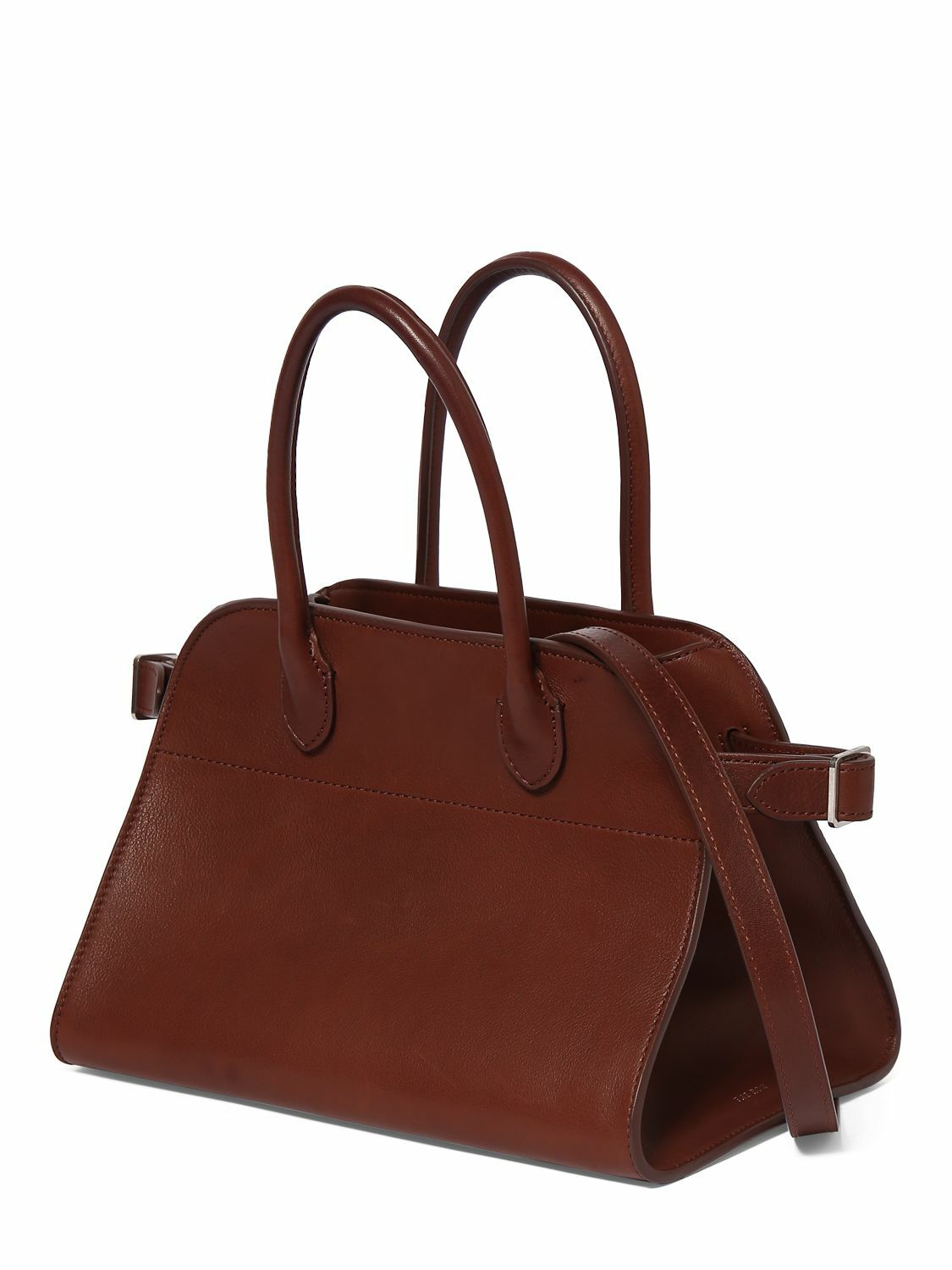
Beyond the Margaux, The Row’s catalogue includes several structured and semi-structured bags that serve different purposes. Buyers seeking a shape nearer a briefcase instead of a relaxed tote tend to gravitate toward the Sofia bag, which offers a structured top-handle shape. On the other hand, the Wander bag has built its own fanbase as a crossbody option — more compact, less formal, and more affordably priced than the brand’s larger totes, often making it a typical entry point for new customers.
Also worth noting is the Ascot, a more structured, boxy top-handle bag with a distinctly vintage-leaning shape, as well as various clutch and pouch options that show up more sporadically from season to season. Each of these speaks to a different use case: the Sofia for office wear, the Wander for daily errands, the Ascot for evening or more formal settings. Grasping this variety is important because The Row is often reduced in conversation to “the tote brand,” when actually the label creates a quite varied set of silhouettes spanning different price tiers and purposes.
Materials, Construction, and What Justifies the Price
A key driver behind the brand’s price point is The Row’s leather sourcing. The house has used Italian-tanned leathers widely, and the finishing technique on pieces such as the Margaux involves minimal stitching lines in order to achieve that unstructured drape. Fewer seams typically result in greater material waste during production, which is part of why the cost stays high even though the aesthetic reads as simple.
Where it exists, hardware leans understated — compact clasps, subtle zippers, understated stamped branding rather than embossed branding. Throughout the row bag range, this approach remains steady and reaches smaller leather goods including card holders and pouches. Since these are the details that separate real quality from counterfeits saturating resale markets, buyers weighing a purchase should closely examine stitching regularity, how the leather ages (most pieces develop a natural patina eventually), and whether the bag’s slouch returns to shape after use.
A Comparison of the Core Silhouettes
The following table breaks down the practical differences between four of the most frequently searched the row bags, based on typical size range, intended purpose, and general price positioning as of 2026.
| Cut | Best For | Available Sizing | General Cost Range |
|---|---|---|---|
| Margaux | Used for everyday carrying and office bags | Starting at Margaux 10 and going to Margaux 17 | Moderate through elevated (varies based on the leather chosen and the size selected) |
| Sofia | A structured style meant for office use | One primary size, occasional variants | High |
| Wander | Everyday casual use in a crossbody form | Compact, single size focus | A more accessible price relative to tote styles |
| Ascot | Suited to evening and formal occasions | Small to medium | Top-tier |
A shopper sizing up the top row bags will find a practical starting point here before making a purchase decision — though this comparison isn’t exhaustive, since The Row rotates special releases and rotating seasonal palettes often.
How a Row Sale Actually Functions: Finding Discounts
Intentionally, The Row steers clear of steep discounting. Instead of following mass-market luxury brands and their frequent promotional cycles, The Row tends to let markdowns emerge toward season’s end, usually via authorized multi-brand retailers rather than its own channels. Rather than limited-time promotions or the label’s mailing list, you’re more likely to find a The Row markdown at reputable high-end online retailers or department stores that carry the line.
Since manufacturing batches are limited, discounted stock disappears quickly, and popular sizes like the Margaux 12 rarely last more than a few days once marked down. This is a situation where patience counts most. Buyers serious about finding value should set alerts with retailers known to carry The Row fashion lines, look through seasonal clearance pages around January and July, and be prepared to act fast once something appears. Pre-owned marketplaces are yet another path, though proving legitimacy matters greatly given how commonly imitation “Row-style” bags turn up.
Important Factors Prior to Buying
Deciding among this handbag lineup ultimately comes down to practical fit over fleeting style, since these pieces are built to last years rather than seasons. Someone traveling to work daily with a computer in tow will find considerably more practicality in a Margaux 15 or 17 than in a compact Wander. Anyone who often goes to evening occasions might prioritize the Ascot’s tailored form over the Margaux’s slouch. A handful of practical questions deserve answers before you commit:
- How often will the bag see use, and for what exact day-to-day purposes?
- Is consistent upkeep practical for you, or does the hide’s finish fit a low-maintenance lifestyle better?
- Given your body proportions and typical day-to-day load, is its size well-matched?
- For an entry point into the label, would a smaller investment piece like a small pouch or card holder make more sense?
These considerations are more consequential with The Row than with brands that lean on branding, as the appeal here is purely about function and texture, not symbolism. A bag that doesn’t suit daily habits will simply sit unused, regardless of how beautifully it’s constructed.
Last Musings on Putting Together a The Row Collection
Instead of merely skimming listings without direction, shoppers benefit from grasping The Row’s signature styles — the Margaux, Sofia, Wander, and Ascot.
The cost involved becomes more understandable once you recognize that every one of these styles addresses a distinct need.
Through 2026, resale value for the brand has stayed robust — exactly because it stays uninterested in fleeting fads — and select Margaux sizes outperform in value retention than bags from far louder, more heavily marketed labels.
If you’re new to this, it’s best to pin down the daily task the bag needs to solve, scope out available inventory through trusted stockists, and watch closely for occasional sales rather than expecting regular price cuts. Patience and precision are what The Row rewards — just as its bags demand the same.